

Displaying items by tag: airflow
Airflow Systems Create Lighting Challenges

Everything in the cleanroom, including the lighting fixtures, is designed to ensure successful air filtration and maintain the laminar airflow in a contamination-free environment. Depending on the function of the controlled environment, a cleanroom will use either HEPA or ULPA filtration. These air-filtering systems are typically an expensive component and one of the first to be considered in construction. They take up a majority of the ceiling space, which leaves a real challenge for lighting the environment.
Cleanroom High Efficiency Particulate Air
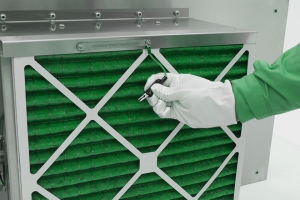
High efficiency particulate air (HEPA), originally called high-efficiency particulate absorber but also sometimes called high-efficiency particulate arresting or high-efficiency particulate arrestance, is a type of air filter. Filters meeting the HEPA standard have many applications, including use in medical facilities, automobiles, aircraft and homes. The filter must satisfy certain standards of efficiency such as those set by the United States Department of Energy (DOE).
Air Flow Systems

There are basically three different air flow systems in cleanrooms: pressurized plenum, ducted supply and ducted return, and ducted supply and open return. Pressurized plenum essentially means you pump the air into the plenum, push it through the filters and down on into the cleanroom. With a ducted supply and ducted return, you’re doing just that; you’re ducting the air delivered to the cleanroom and you’re ducting the air back out of the cleanroom.
Air Flow & Ceiling Filter

Air Flow Rates
For detailed information on Air Flow Velocity Rates, contact a our specialists to get specific answers to your project.
Air Flow Design & Cost
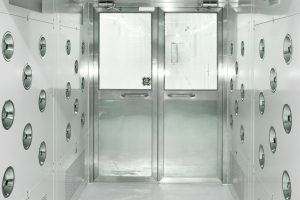
It does, and actually in opposite ways. A single pass cleanroom is going to cost you less to construct because you don’t need that return air path, or that secondary containment, and you need secondary walls to do that. However, the problem with it is you cannot control the outside environment as well.
Air flow systems design

There are basically three different air flow systems in cleanrooms: pressurized plenum, ducted supply and ducted return, and ducted supply and open return. Pressurized plenum essentially means you pump the air into the plenum, push it through the filters and down on into the cleanroom. With a ducted supply and ducted return, you’re doing just that; you’re ducting the air delivered to the cleanroom and you’re ducting the air back out of the cleanroom. This last design is prevalent in a pharmaceutical cleanroom arrangement where you have to control the air. The most efficient from a cost and operational standpoint, is the ducted supply and open return. This involves ducting the air into the cleanroom though you let the air flow into an open return, which is essentially an return air plenum.
Cleanroom Isolators
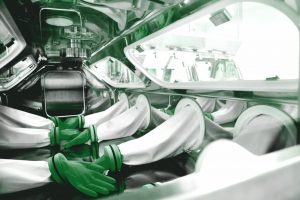
In an industrial cleanroom environment, unidirectional air flow can provide a component or process with protection from airborne contaminants, but additional measures may be required to block these types of contaminants in certain applications. Barriers between the contamination source and the process, product, or personnel in the cleanroom can effectively shield sensitive elements. In addition to cleanroom garments, curtains, and structures, clean air devices, such as transfer hoods, safety cabinets, and isolators can be used to achieve the necessary level of contaminant control. These devices usually have their own air filtration units independent of cleanroom ventilation and can provide workspaces that are some degree cleaner than the larger cleanroom itself.
Key specifying cleanroom lighting

Specifying lighting systems for cleanroom facilities requires considerations beyond energy and maintenance savings. While lighting for cleanrooms should be energy efficient and provide proper illumination for the task at hand, it is crucial that lighting coordinates with air-supply systems and minimizes any chances for contamination.
Air flow principles

Cleanrooms maintain particulate-free air through the use of either HEPA or ULPA filters employing laminar or turbulent air flow principles. Laminar, or unidirectional, air flow systems direct filtered air downward or in horizontal direction in a constant stream towards filters located on walls near the cleanroom floor or through raised perforated floor panels to be recirculated.


