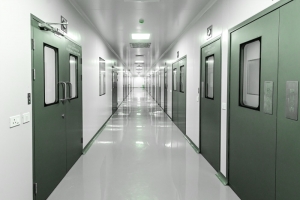
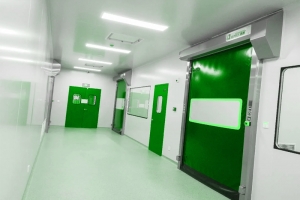
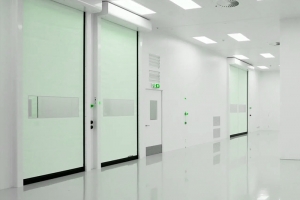
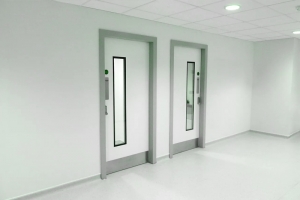
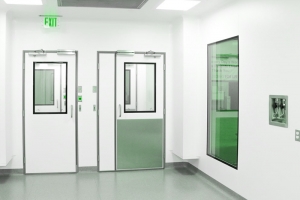
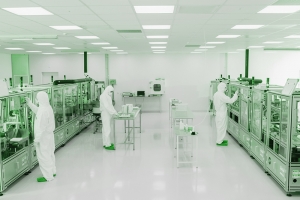
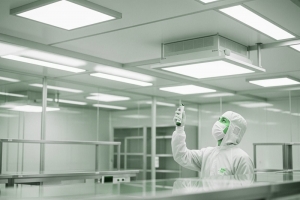
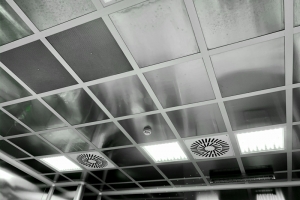
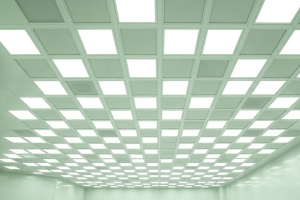
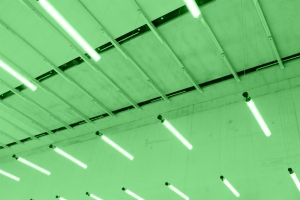
A cleanroom may appear to be a simple, bright, white space, but the lighting inside it serves a much more critical purpose. In these environments, even tiny particles, subtle shadows, or minor visual distortions can interfere with sensitive work and affect outcomes. Lighting, therefore, needs to help people clearly see fine details while supporting strict contamination control.
When the lighting is done right, it quietly supports every process in the room; when it isn’t, it can quickly become a source of contamination or frustration.
For that reason, cleanroom lighting fixtures must be tightly sealed, easy to sanitize, and capable of delivering steady, uniform illumination. They also need to integrate with the room’s controlled airflow without creating turbulence or particle traps. Depending on the industry and application, lighting systems may also need to meet standards such as ISO, GMP, FDA, or NSF requirements.
Cleanroom Classifications
To define how clean the air inside a controlled environment must be, cleanrooms are classified according to specific standards. The two systems most commonly referenced are ISO 14644-1 and GMP.
ISO 14644-1 is the international standard used across industries such as healthcare, pharmaceuticals, food production, medical devices, and aerospace. It defines air cleanliness by measuring the concentration of airborne particles per cubic meter of air.
The scale ranges from ISO Class 1 to ISO Class 9, with ISO 1 representing the most stringent level of cleanliness and ISO 9 the least.
Another widely used system, particularly in pharmaceutical manufacturing, is the GMP grading system.
EU GMP Annex 1 defines Grades A through D for sterile medicinal product manufacturing. These grades address not only particulate contamination but also microbiological cleanliness, reflecting the stricter requirements of aseptic production environments.
Cleanroom classifications also influence lighting design. Higher-grade cleanrooms require lighting systems that minimize particle generation, maintain sealed surfaces, and integrate with the room’s airflow patterns.
The table below provides a quick reference for common cleanroom classifications, typical applications, and key lighting considerations.
| ISO Class |
GMP Grade (Pharma) |
Typical Application |
Lighting Implication |
| ISO 1–2 |
— |
Extremely rare, highly specialized environments |
Very few luminaires exist for these classes, requires custom engineering |
| ISO 3–4 |
— |
Semiconductor (photolithography), aseptic filling, Pharmaceutical compounding, ULSI water fabrication, R&D cleanrooms, medical device packaging |
Luminaire must seal to the ceiling, withstand HVAC air pressure without bypassing HEPA/FFU, and allow maintenance without breaking the room seal |
| ISO 5 |
Grade A / B |
Ion lithium battery, solar, medical device, film/packaging, pharmaceutical cleanrooms, biotech |
Sealed fixtures designed to support ISO-rated space requirements; smooth, cleanable surfaces |
| ISO 6 |
— |
Fine chemicals, liquid crystal displays, life-science cleanrooms, silicon ingots, optical fiber |
Sealed fixtures; smooth, cleanable surfaces |
| ISO 7 |
Grade C |
Transistors, ULSI assembly test, computer disk assembly, miniature bearings |
Sealed fixtures; smooth, cleanable surfaces |
| ISO 8 |
Grade D |
Pharmaceutical cleanrooms (secondary), medical device cleanrooms, biotech |
Sealed fixtures; smooth, cleanable surfaces |
| ISO 9 |
— |
Printed circuit boards, precise printing, dust-free garment cleaning, and food processing |
Controlled environment fixtures with ingress protection |
Standards and Certifications for Cleanroom Lighting Fixtures
Cleanroom classifications define the level of air cleanliness required in a controlled environment, but they do not specify how lighting fixtures themselves should be designed or tested.
Additional standards evaluate whether fixtures can maintain a proper seal, withstand frequent cleaning and disinfecting, resist corrosion, and integrate with ceiling systems without compromising the controlled environment.
NSF P442
NSF P442, “Controlled Environment Light Fixtures,” is a protocol developed by the National Sanitation Foundation (NSF) to evaluate lighting fixtures used in cleanrooms and other controlled or containment environments.
These requirements are particularly important in cleanrooms because HVAC systems create dynamic positive and negative pressure conditions. Under these conditions, standard lighting seals may fail, potentially allowing air leakage or particle intrusion that can compromise the controlled environment.
Another standard is NSF/ANSI 2. While the requirements of NSF/ANSI 2 are incorporated within NSF P442, the two serve different purposes. NSF/ANSI 2 focuses on the splash zone and establishes minimum food protection and sanitation requirements for the materials, design, fabrication, construction, and performance of food handling and processing equipment, including lighting fixtures. It requires that fixture materials be non-toxic, corrosion-resistant, durable, and suitable for frequent cleaning.
We offer a range of NSF-certified lighting products to meet the demands of controlled environments and support a variety of project requirements.
IP Rating
The IP (Ingress Protection) rating indicates how well an enclosure protects against the intrusion of solid particles and water. IP65 is the baseline requirement for most cleanrooms. It ensures the fixture is completely sealed against dust and can withstand being sprayed with water during standard cleaning.
At AGC, we offer lighting solutions with ratings up to IP69K, which are designed to withstand high-pressure, high-temperature washdowns, making them well suited for cleanroom and other controlled environments where sanitation and maintenance are critical.
Hazardous Location Classifications
Some cleanrooms in applications such as pharmaceutical compounding, chemical processing, also involve flammable gases, vapors, or combustible dust. In these situations, lighting fixtures must be specifically rated for Hazardous Locations to prevent them from becoming a potential ignition source.
In North America, hazardous locations are classified under the National Electrical Code (NEC) using a system of Classes, Divisions, and Groups. Class I covers flammable gases or vapors, Class II combustible dusts, and Class III ignitable fibers. Division 1 applies where hazardous materials are present during normal operations, while Division 2 covers locations where they appear only under abnormal conditions.
Hazardous areas are also classified using ATEX and IECEx zone-based systems. These frameworks are widely used throughout Europe and in many international markets to certify equipment intended for explosive atmospheres.
Specialty Lighting Solutions
The fixture construction is critical. But for some medical, pharmaceutical, or laboratory settings, the wavelengths of the light are also important.
White light of around 5000K CCT, works well for most cleanroom applications because it provides bright, neutral illumination that supports detailed work. Some materials and processes are photosensitive, meaning that white light can also be a source of contamination. In these cases, specialized lighting is often used to control or filter the emitted wavelengths.
Amber Lighting for Photolithography and Photoresist Processes
In semiconductor manufacturing, photolithography relies on light-sensitive materials known as photoresists. The blue portion of the spectrum around 400 nm can unintentionally expose photoresist and trigger premature reactions.
To prevent this, many semiconductor cleanrooms use amber lighting. Amber LED fixtures typically operate at wavelengths around 590 nm, which effectively eliminates the shorter wavelengths. This allows technicians to work safely in the space without risking accidental exposure of sensitive wafers.
UV-Free Lighting for Pharmaceutical and Light-Sensitive Storage
In pharmaceutical manufacturing and storage environments, certain drug compounds, biologics, and active pharmaceutical ingredients (APIs) are vulnerable to photodegradation. Exposure to certain wavelengths of light, like UV and blue, can trigger chemical changes that reduce product stability, potency, or shelf life.
To reduce this risk, many facilities use UV-free amber lighting. These lighting systems limit or eliminate the UV portion of the spectrum and significantly reduce shorter wavelengths, helping protect sensitive materials from light-induced degradation.
Red Lighting for Animal Research
Light influences circadian rhythms, hormone production, sleep cycles, and cognitive processes, all of which are important factors in controlled research environments.
In animal research facilities, maintaining precise light–dark cycles is essential to preserving the natural biological rhythms of laboratory animals.
Many animals, particularly nocturnal species such as rodents, have limited sensitivity to light in the red portion of the spectrum. Because of this, red LED lighting is often used during the animals’ dark cycle. It allows staff to observe animals, perform routine checks, or carry out necessary tasks without significantly disturbing the animals’ circadian rhythms or behavior.
Note:
Some facilities try to control unwanted wavelengths by installing yellow or red filter covers over standard white light fixtures. While this approach can reduce certain parts of the spectrum, the filters tend to degrade over time. As they age, their filtering performance can change.
A more reliable approach is to use native colored LEDs, which generate the required wavelength directly rather than relying on external filters. For example, AGC Lighting offers customized lighting solutions with specific spectral outputs, such as amber, red, and green, to support different project needs.
For more details, contact us.