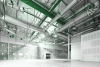
Cleaning under the raised-floor plenum
It's worse than cleaning out the garage. It's cramped, stuff is piled and tangled everywhere, and what's worse, a lot of it is alive! And like a bunch of snakes, you're afraid that if you touch something, it will bite -- only this "bite" might be an outage that could cost you your job.
But it has to be done. Just try blowing through a tangled mass of limp spaghetti and you'll get some idea of what your air conditioners are facing if you're one of the majority whose under-floor looks like a multi-colored pasta dish.
There's a lot of power wasted when fans try to move huge volumes of air through that maze.
But it's worse than that. The air you're paying so much to cool can't get to where it's needed, so much of your expensive cooling capacity is wasted. It makes no difference how many perforated or grate tiles you put in; if the air volumes and pressures can't get to those tiles, it's like throwing a glass of water at a screen door -- what's on the other side isn't going to get very wet. And your equipment isn't going to be cooled very well either.
We know it has to be done, but how to go about it? It can be a daunting task, and there are always so many more important things, aren't there? Actually, there really aren't, because that new high-performance hardware you're anxious to get running is going to fail if you can't cool it, so you should look at the cleanup as just another preparatory step to the new installations.
Like cleaning out the garage, you have to start somewhere. Clear out an easy area. It may be in a place that makes minimal improvement, but that's OK. Like a wise man said, "Every journey begins with a single step." Maybe you already know where abandoned cable is piled, and every cable that's easy to remove will likely make others easier to access, or at least identify.
But here comes the challenge: You really shouldn't remove more than two adjacent floor tiles at a time, and you should leave at least four in place before removing the next two. Taking out more can de-stabilize the floor and cause misalignment, which results in leaks and the waste of more of that precious air you're working so hard to preserve. While you're working, lots of air will pour through those open tiles, which can air-starve hardware in other parts of the floor. If you start to get serious overheating somewhere, you may need to limit your work in critical areas to short durations and replace the tiles until things cool down. Just remember, every step you take will make things a little bit better.
This is not a job for one person. Someone else will have to get the "black bean" and be designated to help with this, because wires will need to be wiggled to see where they go, and you will often need to cut them in order to untangle them and pull them out. But before cutting, mark the wires! Colored electrician's tape works well for this: blue for "dead"; red for "critical -- don't disconnect"; yellow for "caution -- need to check further"; and green for "OK to unplug and re-dress." (Look in the electrical department at Home Depot or Lowes.) You may want to do more specific marking while you're at it, but that's up to you.
Then comes the challenging part. Murphy's Law virtually guarantees that the cables you most need to clean up will be mostly marked red. These require a plan, and will also mean some scheduled downtime, but that's a lot better than unplanned outages due to over-temperature failures. Work it out on paper ahead of time. And seriously consider installing an overhead cable tray ("basket-type" so the air goes through) for new cables. You can run and mark wire and glass ahead of time this way, then do an enormous amount of re-connecting during your planned downtime, which will probably be a lot shorter than it would have been.
If you must keep those cables under the floor, you need to be aware of what paths you're trying to keep clear. First is the area in front of any air conditioner. Your cabinets should be arranged in a hot-aisle/cold-aisle configuration (front-to-front and back-to-back), and your air conditioners should be at the ends of the rows, preferably aligned with the hot aisles. But no matter how things are arranged, cables should be run parallel to the air flow. Cables that need to cross the air stream should do so as far from the air conditioners as possible, and should be spread out as flat as is practical. If you use a cable tray (recommended), again, use "basket-type" and keep it relatively high under the floor if you have enough floor depth, and under the hot aisle tiles if the air flow is parallel to the cabinet rows.
While you're under that floor, make good use of a vacuum -- preferably one with a Hepa Filter so fine dirt doesn't just blow back into the room, as can happen with a standard shop vac.
We haven't mentioned the old piping that many people still have left over from those ancient water-cooled mainframes. If you're still in one of these legacy computer rooms, you probably have a punch card full of other problems, like a raised floor that's 12-inches or less in height and air conditioners added wherever they would fit. This makes cleanout even more important, because there's not much room for air flow in the first place, and air paths are probably not what they should be either.
Resources & Articles
CLIN ® "Resources" page is for individuals/companies seeking information on cleanrooms and controlled environments. Find Cleanroom News, Discussion Forums, Cleanroom Cleaning Recommendations, Cleanroom Terminology, Cleanroom Directory, and more.
Content Disclaimer
Information are contributed by/from different websites and all credit goes to its respective owners/writers/websites/companies and etc, and while we endeavour to keep the information up to date and correct, we make no representations or warranties of any kind, express or implied, about the completeness, accuracy, reliability, suitability or availability with respect to the website or the information, products, services, or related graphics contained on the website for any purpose. Any reliance you place on such information is therefore strictly at your own risk.
In no event will we be liable for any loss or damage including without limitation, indirect or consequential loss or damage, or any loss or damage whatsoever arising from loss of data or profits arising out of, or in connection with, the use of this website.
Through this website you are able to link to other websites which are not under the control of respective owners/writers/websites/companies and etc. We have no control over the nature, content and availability of those sites. The inclusion of any links does not necessarily imply a recommendation or endorse the views expressed within them.
Every effort is made to keep the website up and running smoothly. However, CLIN ® takes no responsibility for, and will not be liable for, the website being temporarily unavailable due to technical issues beyond our control.