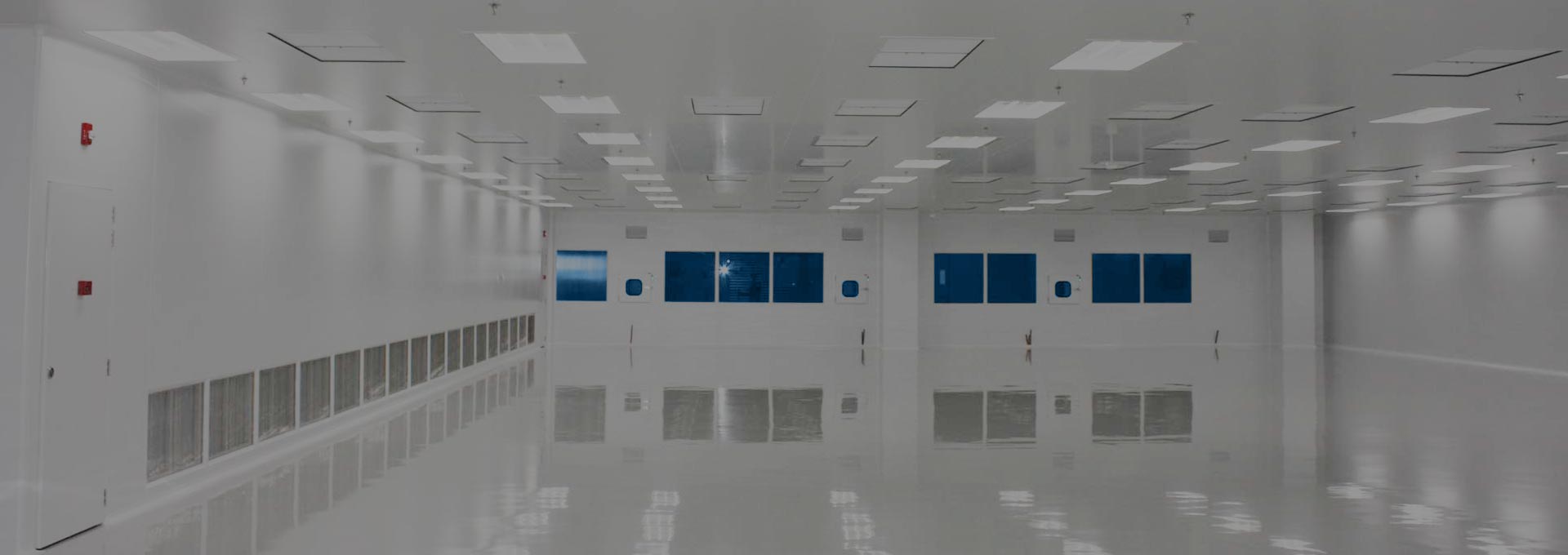
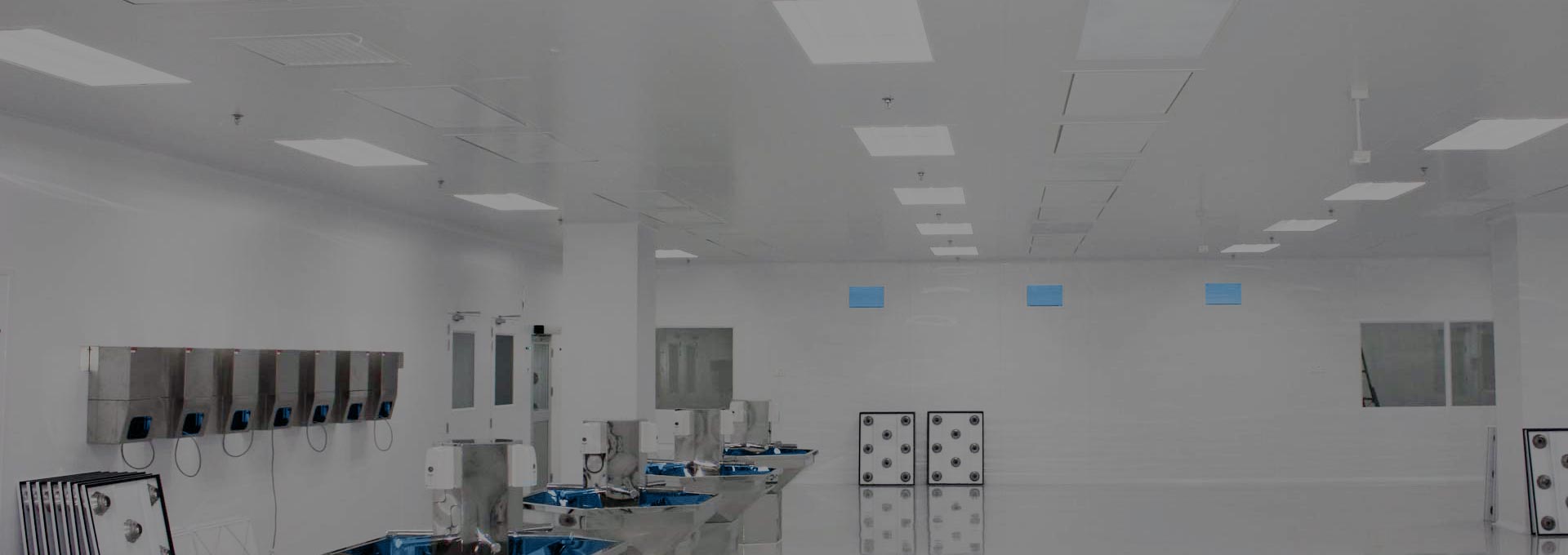
A question commonly asked is "What is a clean room?" Generally speaking a "clean room" is an enclosed room that has equipment which controls the amount of particulate matter in the air by using air pressure and filters. To meet requirements of a "clean room" as defined by Federal Standard 209E and newer ISO Standards, all clean rooms must not exceed a particulate count as specified in the air cleanliness class.
As of November 29th, 2001, the Federal Standard 209E has been replaced with ISO 14644-1. This method is simple; the number assigned to the class is the classification that the room must be designed to. In the Fed. Standard 209E, Class 1 was the cleanest. In the new ISO 14644-1 Standard, Class 3 is the cleanest. The difference? Generally speaking, the federal standards were measured in cubic feet and the ISO standards are measured in cubic meters.
What is measured in the air? Class 3, 4, and 5 are based on the maximum number of 0.1 and 0.5 micron particles that are permitted in a cubic foot of air approaching any work operation within the room. Class 6, 7, and 8 are based on the number 0.5 micron particles.
What is a micron? To give you an idea of what is being measured, one micron is one-hundredth the width of a human hair. The smallest particle seen with the naked eye is a 10 micron particle. Clean rooms can control 0.01 and 0.05 particles!
Where do these particles come from? The clean room is under positive pressure, keeping out new particles from coming in. So where do they come from? Micro-organisms come from people in the room and other particulates from the processes in the room. Microbes come from skin cells of humans. We shed our outermost layer of skin every 24 hours, that is 1 billion flakes every 24 hours! One flake is about 35 microns.
Air Quality: A properly designed clean room must have a high rate of air changes to scrub the room of particulates. A Class 5 room can have an air change rate of 400 to 600 times per hour while a class 7 room can change at 50 to 60 changes per hour.
Testing and Certification: Once the room is completed, most specifications call for testing and certification. Some requirements state that the room should be tested annually also. Testing is usually conducted by an independent testing agency using the ISO Standards. It is also imperative for the owner to purchase a clean room monitor in order to determine the daily status of the room.