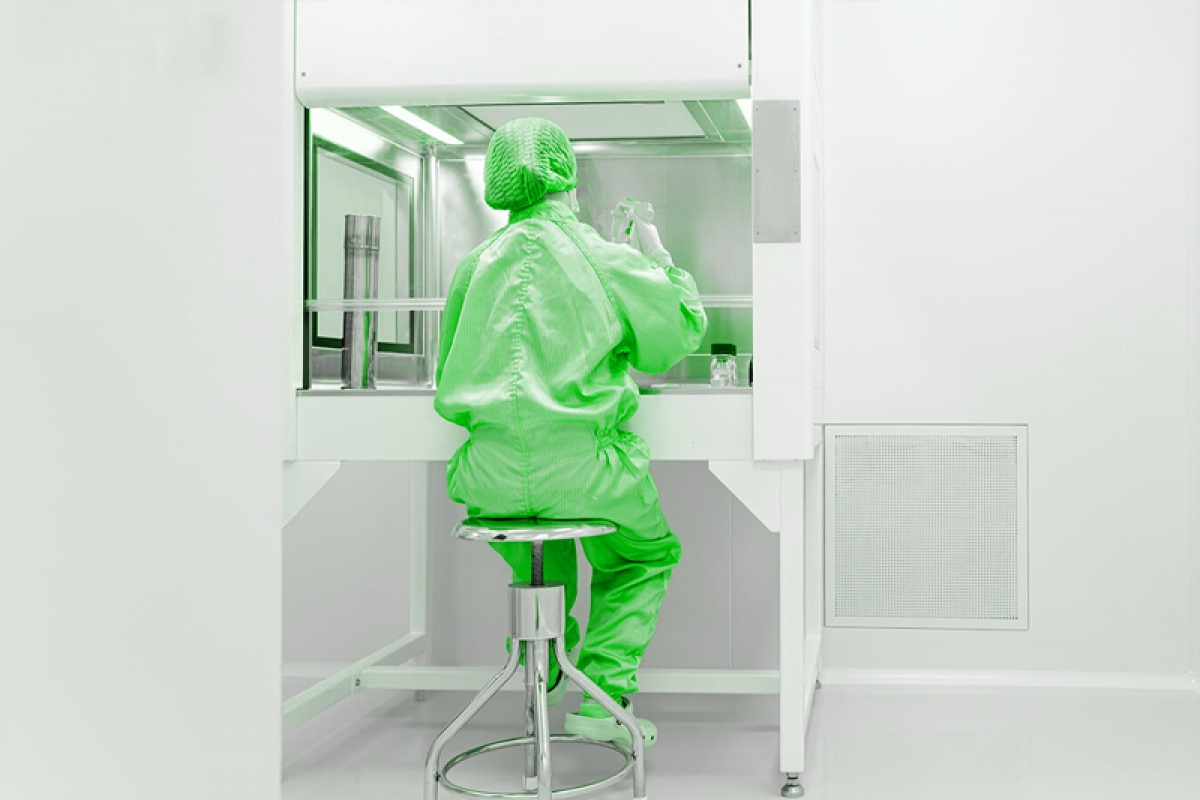
Regular maintenance of your cleanroom is necessary to keep your cleanroom classification and CGMP status. This includes weekly cleanroom deep cleaning, regularly checking and change out prefilters on return air grills, monthly internal cleanroom particle test, annual 3rd party cleanroom particle test, regular HVAC maintenance, immediate repair any damaged cleanroom element , and proper training of cleanroom personnel.
1. Daily Cleaning
Daily – staff should wipe down all cleanroom surfaces and equipment, swifter floor, pull new tacky mat, put away unused consumables or equipment, and empty trash cans. Best to have check-list posted in the cleanroom with signatures to ensure this is done daily.
2. Weekly Deep Cleaning
Weekly – staff should spend a minimum of 2 hours wiping down all cleanroom surfaces and equipment, vacuum then mop cleanroom floor with either soap/water or cleaning chemicals, wipe down cleanroom walls, empty trash, organize all equipment and consumables. Replace tacky mat if needed. Replenish cleanroom garments, gloves and booties. Throw away or send for laundering used garments. If part of protocol wipe down ceiling tiles. If there is a raised cleanroom floor, then staff should vacuum under floor. Best to have check-list posted in the cleanroom with signatures to ensure this is done weekly.
3. Regularly Check and Change Out Prefilters on Return Air and Makeup Air Grills
Cleanrooms typically have MERV prefilters on all return air grills, make up air intakes and inside HVAC air handler. Regularly checking and replacing these prefilters will keep cleanroom air flow and HVAC air flow at designed volumes. If these filters get clogged air flow will decrease resulting in dirtier cleanroom and causing the HVAC system to be less effective. In addition, regularly replacing the prefilters on return air grills and make up air intakes will extend HEPA fan filter life.
4. Monthly Internal Particle Test
Most cleanroom managers do monthly particle tests using their own particle counter to make sure room is meeting class and there have been no significant changes in particle count. This is less expensive than 3rd party test and provides baseline for cleanroom performance. It is important to follow ISO-14644-1 test procedure.
5. Annual 3rd Party Particle Test
Most cleanroom managers do an annual 3rd party particle test to make sure the cleanroom is meeting class and fulfill their CGMP or ISO requirements. The 3rd party test results can be used to confirm internal monthly test accuracy. The 3rd party tester should be following ISO-14644-1 and using an NIST traceable calibrated particle counter and there have been no significant changes in particle count. This is less expensive than 3rd party test and provides baseline for cleanroom performance. It is important to follow ISO-14644-1 test procedure.
6. Annual HVAC Maintenance
In most cases cleanroom HVAC maintenance is not that different from standard commercial HVAC maintenance. Thorough cleaning of coils, drains, and elements. Replacing or cleaning filters Inspecting connections, motor operations, and thermostat functionality. Checking refrigerant pressure. Since cleanroom HVAC run year around this maintenance should be done on quarterly or semi-annual basis.
7. Repair any Damaged Cleanroom Element Immediately
Most common damage to cleanrooms include water damage to walls or ceiling tiles, bubbles or scratches in flooring, broken lights, and doors that don’t close completely. Maintenance should repair damaged items immediately as they will impact cleanroom cleanliness and are a violation of CGMP. If room pressure is not per specification there may be a problem with AC systems or HEPA fan filter units. This will affect cleanroom temperature and cleanroom particle levels. Defective HEPA fan filter units should be replaced immediately to maintain air changes per hour and prevent contaminants from entering your cleanroom.
8. Proper Training of Cleanroom Personnel
Training cleanroom personnel on causes contamination allows them to implement proper procedures for cleanroom operations, cleaning and maintenance. Management commitment to spending time and resources to maintain and clean the cleanroom is also a key requirement.
Summary: Regular maintenance and cleaning of your cleanroom is necessary to keep your cleanroom at class and follow CGMP. The keys are daily cleanroom cleaning, weekly cleanroom deep cleaning, regularly checking and change out prefilters on return air grills, monthly internal cleanroom particle test, annual 3rd party cleanroom particle test, regular HVAC maintenance, immediate repair any damaged cleanroom element, and proper training of cleanroom personnel. Follow these steps and your cleanroom will be particulate free and have a long service life.