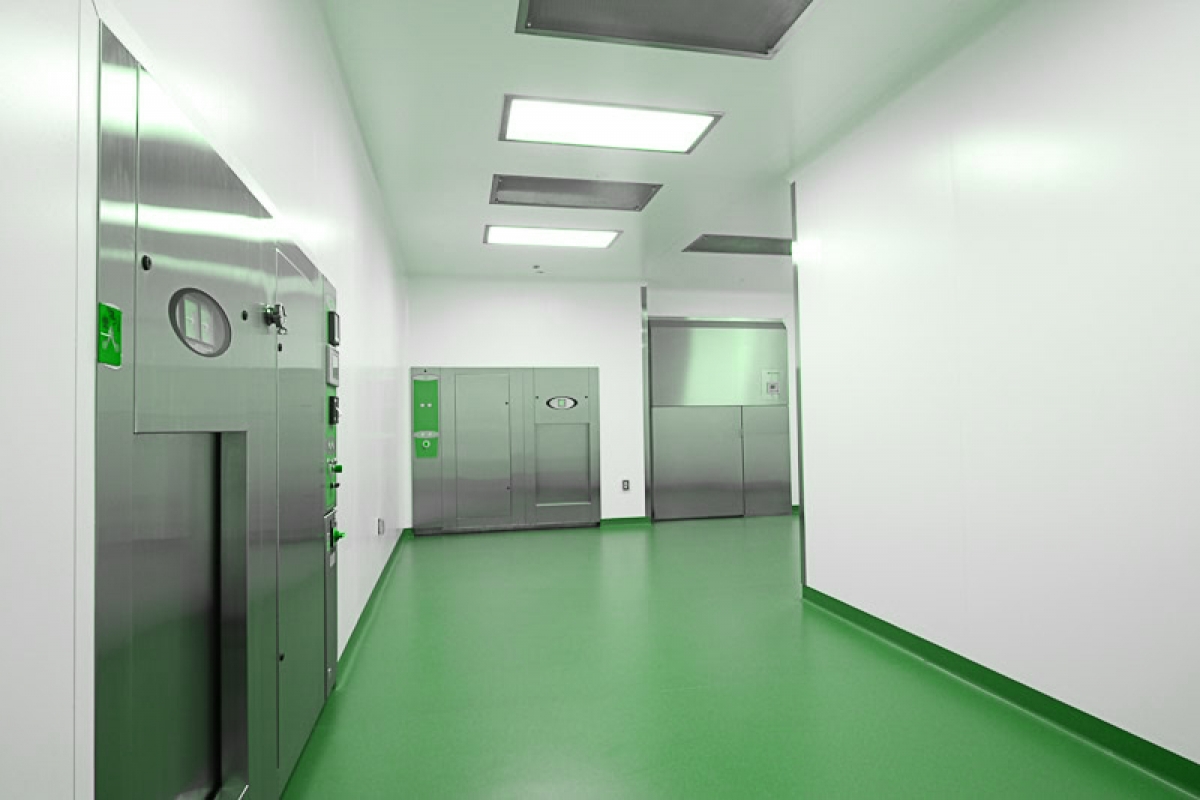
For industries that rely on Cantrol International’s controlled environments (pharmaceuticals, biotechnology, healthcare, and electronics), flooring selection is a critical step in meeting ISO standards.
This guide reviews the top cleanroom flooring solutions, their advantages, and the criteria to consider when matching flooring to ISO classifications.
Why Flooring Matters in an ISO-Classified Cleanroom
Flooring is a significant contributor to maintaining air cleanliness and preventing contamination. Even the smallest crack or porous surface can harbour particles or microbes. In an environment designed to meet strict airborne particulate limits, the floor must work in harmony with walls, ceilings, filtration, and entry protocols.
The right floor:
- Resists chemical spills and repeated disinfection.
- Prevents particle shedding and bacterial growth.
- Handles heavy traffic from carts, trolleys, and footfall.
- Meets ISO cleanroom particle count requirements.
Key Factors in Selecting Cleanroom Flooring
Before narrowing down material choices, it’s important to evaluate both operational needs and compliance requirements.
ISO Classification Needs
Higher-class cleanrooms, such as ISO Class 5 or ISO Class 6, require floors with seamless finishes and minimal particle retention. Lower-class rooms (ISO Class 7 or 8) still need non-porous, cleanable surfaces, but may have more flexibility in material choice.
Chemical and Disinfectant Resistance
Pharmaceutical, biotech, and electronics cleanrooms often use strong cleaning agents. Flooring must withstand repeated exposure without degrading or leaching.
Static Control
For electronics and aerospace applications, electrostatic discharge (ESD) control is crucial. Flooring materials can be specified with conductive or dissipative properties to reduce static build-up.
Maintenance and Repair
Seamless, non-absorbent floors are easier to maintain. Modular systems may allow for quick replacement in high-wear areas.
Load and Traffic Requirements
Some environments have heavy equipment or rolling loads. Floors must provide compressive strength and avoid deformation under weight.
Top Flooring Options for ISO-Classified Cleanrooms
1. Epoxy Resin Flooring
Epoxy resin systems are one of the most widely used cleanroom flooring solutions due to their seamless application and high chemical resistance.
Benefits:
- Completely seamless surface with no joints for particle accumulation.
- Highly resistant to cleaning agents, acids, and solvents.
- Can be customized for anti-static or slip-resistant properties.
- Long service life under heavy traffic.
Best for:
ISO Class 5–8 cleanrooms in pharmaceuticals, biotechnology, and healthcare. Epoxy’s impermeable finish makes it ideal for sterile environments where contamination control is critical.
2. Polyurethane Resin Flooring
Polyurethane resin floors provide flexibility and better thermal shock resistance compared to epoxy. This is valuable in areas where rapid temperature shifts occur, such as when cleaning with hot water.
Benefits:
- Tolerates thermal cycling without cracking.
- Chemical resistance suitable for strong cleaning agents.
- Slightly softer underfoot, improving comfort for staff on long shifts.
- Available in conductive versions for ESD control.
Best for:
Pharmaceutical manufacturing areas, food processing cleanrooms, and high-temperature cleaning zones.
3. Vinyl Sheet Flooring (Heat-Welded)
High-quality vinyl flooring installed in sheet form with heat-welded seams offers a smooth, continuous surface that is easy to clean and resistant to moisture ingress.
Benefits:
- Cost-effective compared to resin systems.
- Welded seams prevent dirt and moisture penetration.
- Available in ESD-safe formulations.
- Simple to replace in sections if damaged.
Best for:
ISO Class 7–8 cleanrooms in electronics assembly, medical device manufacturing, and laboratories with moderate chemical exposure.
4. Rubber Flooring
Rubber flooring, especially synthetic variants like ethylene propylene diene monomer (EPDM), offers resilience, comfort, and sound dampening.
Benefits:
- Softer underfoot, reducing fatigue in long shifts.
- Naturally slip-resistant and impact-absorbing.
- Can be manufactured with conductive properties.
- Resistant to many mild chemicals and disinfectants.
Best for:
Cleanrooms in healthcare and diagnostics are where comfort, slip resistance, and noise control are priorities.
5. Conductive Flooring for ESD Control
For electronics, semiconductor, and aerospace cleanrooms, controlling electrostatic discharge is essential to protect sensitive components.
Options include:
- Conductive epoxy or polyurethane resin systems.
- Conductive vinyl tiles or sheets.
- Rubber floors with conductive fillers.
Benefits:
- Prevents damage to electronic components from static discharge.
- Meets ANSI/ESD S20.20 standards in addition to ISO cleanliness requirements.
- Seamless or modular options are available depending on the application.
Best for:
ISO Class 6–8 electronics manufacturing cleanrooms.
Flooring for Different ISO Classes
ISO Class 5–6
These ultra-clean environments demand seamless resin floors (either epoxy or polyurethane) with a smooth, impervious surface. The finish must withstand frequent, aggressive cleaning with strong disinfectants.
Recommended features:
- Seamless installation with coved skirting to wall junctions.
- High-gloss finish for easy visual inspection of cleanliness.
- Anti-microbial additives to reduce bacterial growth risk.
ISO Class 7–8
While still requiring non-porous, easily cleanable surfaces, these rooms can use heat-welded vinyl or rubber flooring as a more cost-effective option. Resin remains an excellent choice for longevity.
Recommended features:
- Welded or seamless joints.
- Slip resistance for safety in high-traffic areas.
- Option for ESD control in electronics applications.
Installation Considerations
Proper installation is as important as the flooring material itself. For Cantrol International cleanrooms, flooring is integrated into the overall build to ensure compliance.
Key steps:
- Substrate Preparation: Concrete or base substrate must be level, dry, and free from contaminants. Any cracks are repaired to prevent future damage.
- Seamless Integration: Resin or welded vinyl is installed with coved skirting to walls to eliminate corners where dirt can accumulate.
- Validation: Post-installation, floors are inspected for surface defects and tested for conductivity (if applicable) before cleanroom commissioning.
Maintenance and Longevity
Even the best flooring will fail early without proper maintenance. A routine cleaning schedule using compatible disinfectants prevents damage and maintains compliance.
Best practices:
- Use lint-free mops and cleanroom-approved detergents.
- Avoid dragging heavy equipment across the floor.
- Conduct periodic inspections for wear, peeling, or seam separation.
- Reapply resin topcoats as part of scheduled maintenance to extend life.
Balancing Cost and Compliance
While resin floors may have a higher initial cost than vinyl, they often provide longer service life and reduced contamination risk in higher class cleanrooms. For ISO Class 7–8 environments with lower contamination sensitivity, welded vinyl or conductive tile may be a practical choice without compromising compliance.
Cantrol International’s design process includes balancing these factors, ensuring that flooring meets ISO requirements, operational demands, and budget.
The Role of Flooring in Regulatory Audits
In regulated industries like pharmaceuticals and biotechnology, flooring can be a point of focus during inspections. Damaged, stained, or poorly maintained floors can raise concerns about cleaning effectiveness and contamination control.
Auditors often check for:
- Seam integrity and absence of cracks.
- Resistance to chemical degradation.
- Cleanliness and maintenance records.
Selecting a compliant, durable flooring system from the outset reduces audit risks and supports long-term operational integrity.
Why Work with a Specialist
Partnering with a company experienced in controlled environment construction ensures that flooring is not treated as an afterthought. Cantrol International integrates flooring selection into cleanroom design from the earliest planning stages, ensuring compatibility with ISO classification, cleaning protocols, and long-term performance goals.
By combining high-grade materials, proper installation, and ongoing support, we help clients achieve and maintain the highest standards of cleanliness and safety.
A Flooring Decision That Supports Compliance and Performance
Cleanroom flooring is more than a surface; it is a functional component of contamination control and compliance. Whether you need seamless epoxy for an ISO Class 5 pharmaceutical cleanroom or conductive vinyl for an ISO Class 7 electronics assembly area, the right choice protects your processes, passes audits, and maintains performance for years.
Cantrol International’s expertise warrants that every cleanroom floor is selected, installed, and maintained to meet ISO standards and operational demands.
If you need more information on the best flooring options, reach out to us today or get a quote.