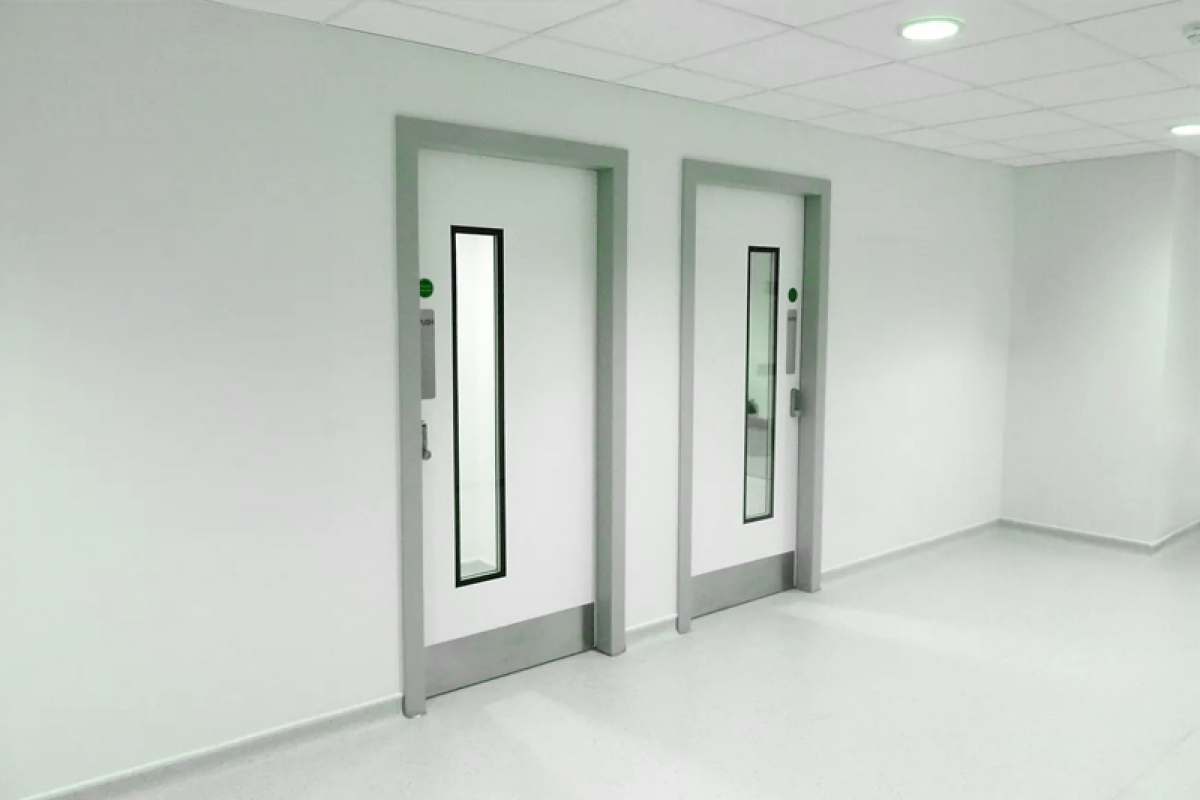
Cleanroom doors are a critical component of controlled environments where contamination control, air pressure stability, and hygiene compliance are essential. Used widely in pharmaceutical, healthcare, food processing, and advanced manufacturing industries, they play a key role in maintaining cleanroom integrity.
This guide explains what cleanroom doors are, the different types available, the materials used in their construction, and the key ISO and GMP standards they must meet.
What Are Cleanroom Doors?
Cleanroom doors are specialist doors designed for use in controlled environments where airborne particles and contamination must be strictly limited. Unlike standard doors, they are engineered with smooth surfaces, airtight sealing systems, and non-porous materials to support hygiene and environmental control.
Their main purpose is to:
- Prevent contamination between cleanroom zones
- Maintain air pressure differentials
- Support strict cleaning and sterilisation protocols
- Ensure compliance with regulatory standards
Why Cleanroom Doors Are Important
In regulated environments, even minor air leakage or surface contamination can compromise product quality or safety.
Cleanroom doors help to:
- Control airflow between classified areas
- Reduce particle ingress and microbial contamination
- Maintain ISO-classified cleanroom performance
- Improve operational safety and workflow efficiency
Types of Cleanroom Doors
There are several types of cleanroom doors used depending on performance requirements, space constraints, and contamination risk.
Sliding cleanroom doors with smooth, non porous surfaces, flush glazing panel, and airtight seals designed for contamination control in a sterile environment
Sliding Cleanroom Doors
Sliding cleanroom doors are ideal for high-traffic environments where space efficiency is important. They provide smooth operation and can be manual or automated, making them suitable for pharmaceutical production and logistics areas.
Hinged Cleanroom Doors
Hinged doors are the most common cleanroom door type. They are durable, cost-effective, and available in single or double leaf configurations for flexible access.
Hermetic Cleanroom Doors
Hermetic cleanroom doors are designed for airtight sealing using compression gaskets. They are essential in GMP and sterile environments where pressure control and contamination prevention are critical.
Fire-Rated Cleanroom Doors
These doors combine fire resistance with cleanroom compliance, making them suitable for regulated facilities where safety and hygiene must coexist.
Automatic Cleanroom Doors
Automatic cleanroom doors use sensors or access control systems to enable touchless operation, reducing contamination risk and improving workflow efficiency.
Interlocking Cleanroom Doors
Interlocking systems prevent two doors from opening at the same time, helping maintain pressure control and reduce cross-contamination between cleanroom zones.
Glass Cleanroom Doors
These doors provide visibility between areas while maintaining a sealed, hygienic structure, improving safety and monitoring.
GRP Cleanroom Doors
GRP (Glass Reinforced Polyester) cleanroom doors are non-porous, impact-resistant, and highly resistant to chemicals and corrosion. They are widely used in high-hygiene environments due to their durability and ease of cleaning.
Cleanroom Door Materials
Material selection is critical for performance, hygiene, and durability.
GRP (Glass Reinforced Polyester)
GRP is widely used due to its:
- Non-porous surface
- High chemical resistance
- Impact durability
- Low maintenance requirements
Stainless Steel
While stainless steel has traditionally been used for its strength, it is heavier, more susceptible to surface damage and corrosion, and generally less hygienic and cost-effective than GRP. It also requires more ongoing maintenance to maintain hygiene performance in demanding cleanroom environments. Read more about how Stainless Steel compares with modern materials like GRP here.
Glass Panels
Toughened or laminated glass is used for visibility while maintaining cleanroom integrity.
Cleanroom Standards: ISO & GMP Requirements
Cleanroom doors must support strict regulatory requirements depending on industry application.
Cleanroom fire doors with flush panels, fire rated glazing window, and sealed edges designed for sterile and fire resistant applications
ISO 14644 Standards
ISO 14644 defines cleanroom classifications based on airborne particle levels. Cleanroom doors must help maintain these controlled conditions by preventing leakage and contamination.
GMP Compliance
Good Manufacturing Practice (GMP) standards are essential in pharmaceutical environments, ensuring hygiene, consistency, and product safety.
Cleanroom doors must be designed to:
- Minimise contamination risk
- Support cleanability and sterilisation
- Maintain environmental control
How to Choose the Right Cleanroom Door
Selecting the right cleanroom door depends on several key factors:
- Cleanroom classification (ISO level)
- Required level of airtightness
- Traffic frequency and workflow
- Hygiene and cleaning protocols
- Fire safety requirements
- Automation needs